
When you receive an Income Withholding Order for support, you must notify the employee, begin withholding by the first pay period 10 days after receipt, and remit funds to the California State Disbursement Unit. Miss either deadline, and you take on personal liability for the amount you should have withheld or forwarded.
TL;DR:
- Employers must verify that the IWO is the federally approved FL-195 form with the correct OMB control number before processing payments.
- The employee must be notified within 10 days of receiving the IWO, and withholding must begin by the first pay period 10 days afterward, or the employer faces liability.
- Child support withholding is capped at 50% of net disposable income unless the order allows up to 65% for arrears, following the lower of state or federal limits.
- Private IWOs require case registration with the SDU before remittance, and all payments must go to the SDU with proper case and remittance IDs.
- Failing to comply with withholding deadlines or processing properly can result in fines, interest charges, and employer liability under California law.
Table of Contents
- What Is an Income Withholding Order and Who Sends It?
- Employer Duties and Timeline After Receiving an IWO
- Calculating Withholding: Net Disposable Income and the 50% Cap
- Processing Private IWOs and Remitting to the SDU
- Multiple Orders: Priority Rules and Prorating
- Employer Liability and Anti-Discrimination Protections
- Electronic IWO and Payment Options for Payroll Systems
- A Compliance Checklist Glendale Payroll Uses With California Clients
- Procedures for Terminating or Modifying Withholding Orders
- Interaction With Federal Tax Liens and Other Garnishments
- Employer Confidentiality and Employee Notification Rights
- Why Payroll Teams Overcomplicate This
- Let Glendale Payroll Handle Your IWO Compliance
- Sources
- FAQ
What Is an Income Withholding Order and Who Sends It?
The Income Withholding for Support order, known as the FL-195, is the federally approved form every California employer must recognize. It carries an Office of Management and Budget control number, OMB 0970-0154, printed in the corner. That number is your first checkpoint. If a document lacks it, treat it with suspicion.
Three types of senders issue these orders:
- IV-D agencies — county child support agencies enforcing court-ordered support through the state system.
- Private or non-IV-D parties — an attorney or custodial parent acting outside the state agency, often requiring extra verification before you remit anywhere but the SDU.
- Courts — direct judicial orders tied to a family law case, sometimes arriving alongside a court order for child support modification.
Reject any withholding document that isn't the OMB-approved form or that directs payment to a private individual instead of a disbursement unit. That's not optional caution. It's the standard the form itself sets, and honoring a fraudulent or improperly routed order creates its own compliance headache.
Employer Duties and Timeline After Receiving an IWO
The clock starts the moment the IWO lands on your desk, and California gives you a narrow window to act correctly.
- Notify the employee within 10 days. Provide a copy of the IWO, a written statement of the employee's rights, and the FL-450 Request for Hearing form.
- Begin withholding by the first pay period occurring 10 days after receipt. You don't get to wait for a "convenient" cycle.
- Keep the original IWO on file. You'll need it if the order is ever challenged or modified.
- Build a repeatable intake workflow. A simple date-stamped folder or payroll-system flag prevents an order from slipping through the cracks during a busy pay run.
The employer handbook published by Los Angeles County walks through this timeline in detail, and it's worth bookmarking alongside your other California child support laws references. Miss the 10-day trigger, and you're not just late. You're exposed.
Calculating Withholding: Net Disposable Income and the 50% Cap
Net disposable income, or NDI, is what's left of an employee's wages after mandatory deductions, and it's the number every withholding calculation runs through. Mandatory deductions include:
- Federal and state income tax withholding
- Social Security and Medicare (FICA)
- State Disability Insurance (SDI)
- Mandatory union dues or retirement contributions required as a condition of employment
Pro Tip: Voluntary 401(k) contributions don't count as mandatory deductions for NDI purposes, so don't subtract them before running the withholding math.
California generally caps child support withholding at 50% of an employee's net disposable income, though the order itself may allow up to 65% in cases involving significant arrears. The federal Consumer Credit Protection Act sets its own ceiling, and you follow whichever limit, state or federal, is lower for that employee.
Here's a simplified walk-through: an employee earns $1,200 gross weekly. After tax and FICA withholding, NDI comes to $900.
Processing Private IWOs and Remitting to the SDU
Non-IV-D, or private, IWOs need one extra step before you touch payroll: confirming the case is registered with the state disbursement unit so payments land in the right place.
- Forward a copy of the private IWO to the SDU if it doesn't already show a valid case and remittance number, so the state can register it before you start sending money.
- Remit withheld funds within roughly 7 business days of the pay date, always with the case number attached so the payment posts correctly.
- Reject any order that doesn't direct payment to the SDU. A private IWO instructing you to pay an individual directly fails the same test as a non-OMB form.
- Charge the allowed administrative fee of up to $1.50 per payment if you want to offset processing costs, deducted from the employee's remaining pay within the withholding limit.
Enroll for electronic SDU payments early. It saves you from mailing paper checks every pay cycle.
Multiple Orders: Priority Rules and Prorating
An employee with more than one support order doesn't give you room to guess. California sets a strict priority sequence, and you follow it every time:
- Current child support comes first, always.
- Current spousal support is next in line.
- Child support arrears follow.
- Spousal support arrears come last.
If the combined orders exceed what the 50% cap allows, prorate each order proportionally rather than paying one in full and shorting another. Document the math you used, because you'll want that record if anyone questions the allocation later. When an order's language is unclear or you're staring at competing IWOs from different counties, call the local Department of Child Support Services or the SDU helpline before you guess wrong.
Employer Liability and Anti-Discrimination Protections
Failing to withhold, or withholding and then sitting on the funds instead of forwarding them, exposes you to real financial consequences under California Family Code provisions governing assignment orders and employer liability. Willful noncompliance can bring interest charges, fines, and in serious cases, contempt of court.
The law also protects the employee on the other side of this transaction. You cannot fire, demote, or discipline someone because you received an IWO for them. That protection is absolute, not a judgment call.
Build in safeguards:
- Save remittance confirmations from the SDU for every payment cycle.
- Keep IWO processing separate from general accounts payable to avoid mixing funds.
- Assign one person, not a rotating cast, as the point of accountability for IWO compliance.
Electronic IWO and Payment Options for Payroll Systems
The e-IWO system speeds up processing and cuts down on transcription errors compared to paper orders arriving by mail. The Administration for Children and Families maintains enrollment guidance for employers who want to receive orders electronically instead of by fax or postal mail.
- Enroll through your state's e-IWO portal to receive orders directly into your payroll system.
- California requires electronic remittance to the SDU under Family Code §17309.5 for employers who already pay other state taxes electronically, using ACH credit, ACH debit, or ExpertPay.
- Confirm your payroll software supports the required file format before your first electronic batch goes out.
Pro Tip: When you batch multiple employees' withholdings into one ACH payment, double-check that each case number reconciles correctly on the SDU's end. A misapplied batch payment creates a paperwork mess that takes weeks to untangle.
If your team handles ACH payroll deposits already, the same-day ACH payroll infrastructure most systems use for direct deposit can often be adapted for SDU remittance too.
A Compliance Checklist Glendale Payroll Uses With California Clients
Here's the sequence typically recommended on every withholding cycle, drawn from experience handling California child support enforcement cases.
- Log the IWO the day it arrives and start the 10-day notification clock immediately.
- Deliver the employee's copy, rights statement, and FL-450 form before the deadline.
- Calculate NDI using California's mandatory-deduction definition, not a generic formula.
- Verify the SDU case and remittance ID before sending any payment.
- Remit within 7 business days and save the confirmation.
- Review the full case file quarterly to catch modifications or arrears changes.
Every engagement often begins with a free comprehensive payroll audit, which is a common way to identify outdated withholding calculations or missing SDU confirmations before they become penalties.
Procedures for Terminating or Modifying Withholding Orders
You don't get to stop withholding just because an employee tells you the case is closed. Termination and modification both require action from the issuing agency or court, not a unilateral decision on your end.
When an IWO terminates, the state agency or court sends a written notice, sometimes called a release or termination notice, instructing you to stop withholding as of a specific date. Until that notice arrives, keep withholding at the ordered amount, even if the employee insists the debt is paid off or the child has reached adulthood. Acting on verbal assurances instead of documentation is one of the more common employer mistakes, and it leaves you liable if the agency later says withholding should have continued.
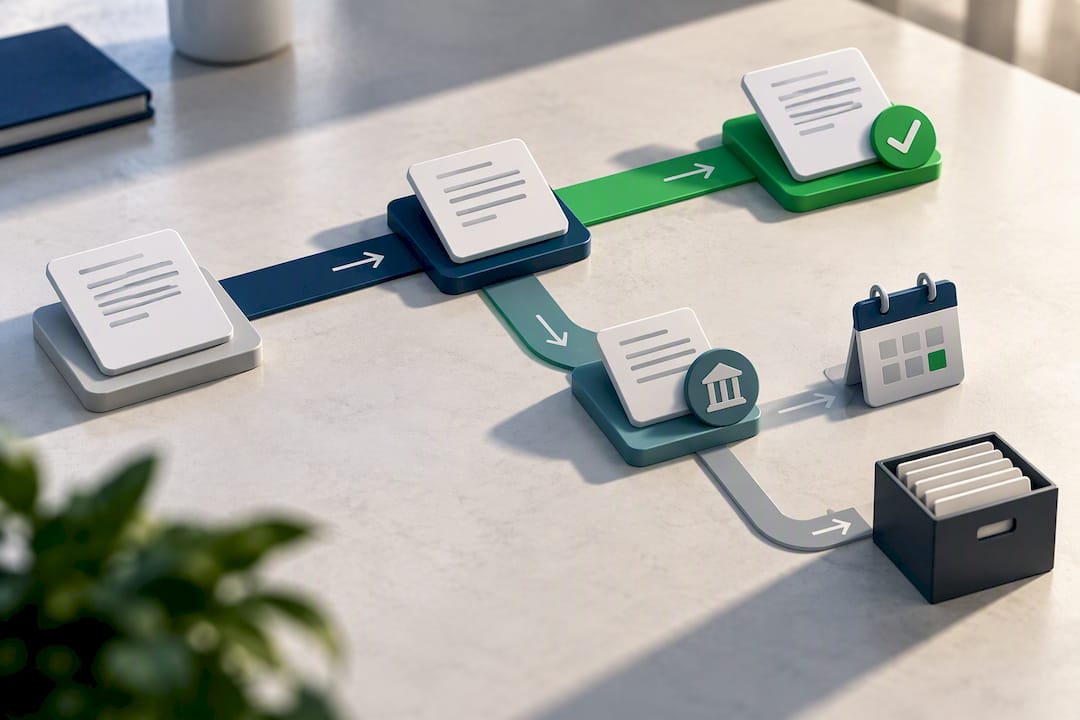
Modifications work similarly. A new IWO reflecting an updated amount supersedes the old one, and you apply the new figure starting with the next pay period after receipt, following the same 10-day logic as an initial order. If an employee files a Request for Hearing to modify or contest the order, keep withholding at the current rate while the hearing is pending unless a court specifically stays the order. Courts, not employers, decide how to modify child support, and your job is to follow whatever the most recent valid document says.
Keep a clear paper trail: date received, date processing began, and the specific document authorizing any change. That record is your best defense if a dispute ever reaches a hearing.
Interaction With Federal Tax Liens and Other Garnishments
Child support withholding doesn't operate in isolation. Many employees carry multiple deductions at once: a federal tax lien, a creditor garnishment, or a bankruptcy order layered on top of a support obligation. California's priority framework generally places child support ahead of most other garnishments, including ordinary creditor claims, because family support obligations carry statutory priority under both federal and state law.
Federal tax liens complicate this slightly. The IRS can issue a levy that competes with a support order, but a support order that predates the lien, or one properly served under state law, typically still takes precedence for withholding purposes. Where you have a legitimate question about which obligation to satisfy first, contact the issuing agencies directly rather than guessing. Getting the sequencing wrong doesn't just risk shorting one creditor. It can trigger liability to whichever party you failed to pay correctly.
Bankruptcy filings add another layer. An automatic stay generally doesn't halt child support withholding, since domestic support obligations are treated differently than most consumer debts under bankruptcy law. Keep withholding unless you receive specific court instruction to stop.
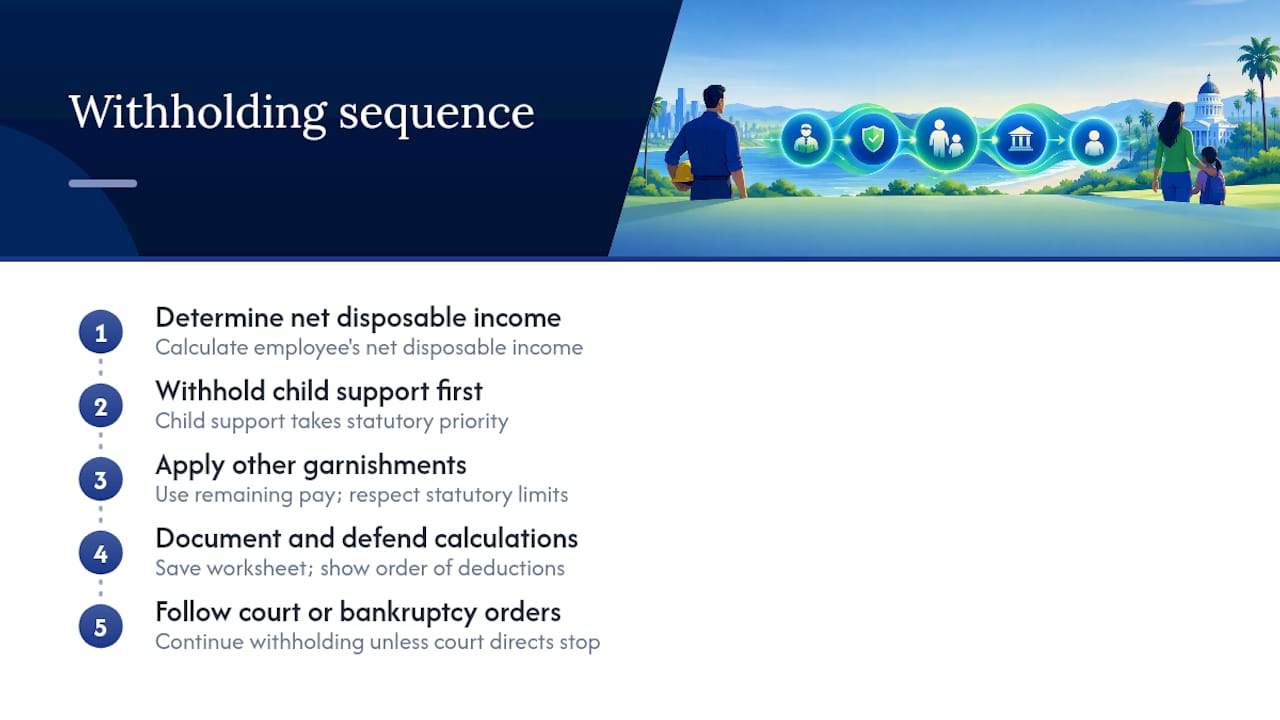
When more than one legal instrument targets the same paycheck, calculate the support withholding first against net disposable income, then apply remaining garnishments against what's left, subject to their own statutory limits. Document every calculation. If a court or agency later questions your math, a clear worksheet showing the order in which you applied each deduction is your strongest defense.
Employer Confidentiality and Employee Notification Rights
Every employee named in an Income Withholding Order has a right to know it exists, and you have a corresponding duty to protect that information from unnecessary exposure inside your organization. The FL-195 and any accompanying case details qualify as confidential personnel information. Store the file the same way you'd store medical records or Social Security documentation: locked access, limited distribution, and no casual discussion in the break room.
Only people with a direct operational need, typically payroll and HR, should see the order's contents. Managers and supervisors generally don't need to know an employee has a support withholding in place, and sharing that detail beyond payroll risks both a privacy violation and, depending on how it's handled, an implicit disciplinary action tied to the order, which California law prohibits.
On the notification side, the employee's rights extend beyond the initial 10-day delivery. If withholding amounts change due to a modification, or if you receive a second order affecting priority, the employee generally has a right to updated information about how the deductions are being calculated. Some county handbooks recommend giving employees a simple written breakdown showing gross pay, NDI, and the withheld amount each time the calculation changes, which reduces disputes and keeps your records defensible if a question comes up later.
Confidentiality cuts both ways. Don't discuss the order with the other parent, an employee's family member, or anyone outside the case unless the SDU or a court specifically authorizes it.
Why Payroll Teams Overcomplicate This
The conventional advice on IWO compliance tends to treat every order as a crisis requiring legal review. That's overkill for the vast majority of cases. Most California withholding orders are routine, the FL-195 form is standardized precisely so employers don't need a lawyer to process it, and the real risk isn't complexity. It's inattention.
We've seen more compliance failures caused by a missed 10-day notification deadline than by any genuinely ambiguous legal question. The fix isn't more legal sophistication. It's a boring, repeatable intake process that treats every IWO the same way, whether it's the first one your company has ever received or the fiftieth.
Where employers get into real trouble is multiple concurrent orders and private IWOs lacking proper SDU registration. Those situations reward caution and a phone call to the county agency before you remit a dollar. Prioritize the process over the paperwork, and the paperwork takes care of itself.
— Glendale Payroll Staff
Let Glendale Payroll Handle Your IWO Compliance
Professional payroll services can assist you in managing California child support enforcement paperwork: instead of your team piecing together FL-195 timelines and SDU remittance rules between other payroll tasks, dedicated payroll professionals handle IWO intake, net disposable income calculations, and remittance timing as part of the regular payroll cycle.
Every new client engagement starts with a free comprehensive payroll audit that flags exactly where your current withholding process has gaps, whether that's a missed 10-day notification, an outdated NDI calculation, or an SDU case number that was never properly registered. From there, our payroll processing and tax filing services take the calculation and remittance work off your plate entirely, backed by our aim for 100% compliance with federal and California state regulations.
If you're a small business owner in Glendale, Burbank, Pasadena, or the greater Los Angeles area handling child support arrears in California or routine withholding orders without dedicated payroll support, review our pricing and service plans and schedule your free audit today.
Sources
- Employer Handbook California Child Support - A Guide for Business
- FL-195 Income Withholding for Support (form and instructions)
- California State Disbursement Unit (SDU)
- California Family Code — Assignment orders and employer liability
FAQ
How Can an Employee Reduce Their Child Support Payment?
Only a court can lower a support amount, typically through a formal request to modify child support based on a documented change in income or custody arrangement. As an employer, you continue withholding at the current ordered amount until you receive a new IWO reflecting the updated figure.
Is Failing to Pay Child Support a Crime in California?
Willful failure to pay court-ordered support can lead to contempt of court charges, and in severe, prolonged cases, criminal prosecution is possible under California and federal law. For employers, the bigger concern is Family Code liability for failing to withhold or forward payments you were legally ordered to send.
How Much Should I Withhold From an Employee Earning $2,000 a Week?
The withheld amount depends on the specific IWO and the employee's net disposable income, not gross pay. Generally, withholding cannot exceed 50% of NDI, so you calculate NDI first, then apply the order's specified amount up to that cap.
What Should Employers Watch for in Upcoming California Child Support Rules?
California child support guidelines are updated periodically at the state level, and employers should monitor official disbursement unit and county handbook updates rather than relying on informal guidance. Glendale Payroll tracks these changes as part of ongoing California payroll tax updates for client accounts.
What Happens if I Ignore an IWO Entirely?
Ignoring a valid IWO exposes you to liability for the full amount you should have withheld, plus potential interest and fines under state law. Courts have also referenced enforcement consequences tied to unpaid support obligations, as outlined in resources covering broader enforcement and liability issues, which underscores why prompt compliance matters more than any single payroll deadline.