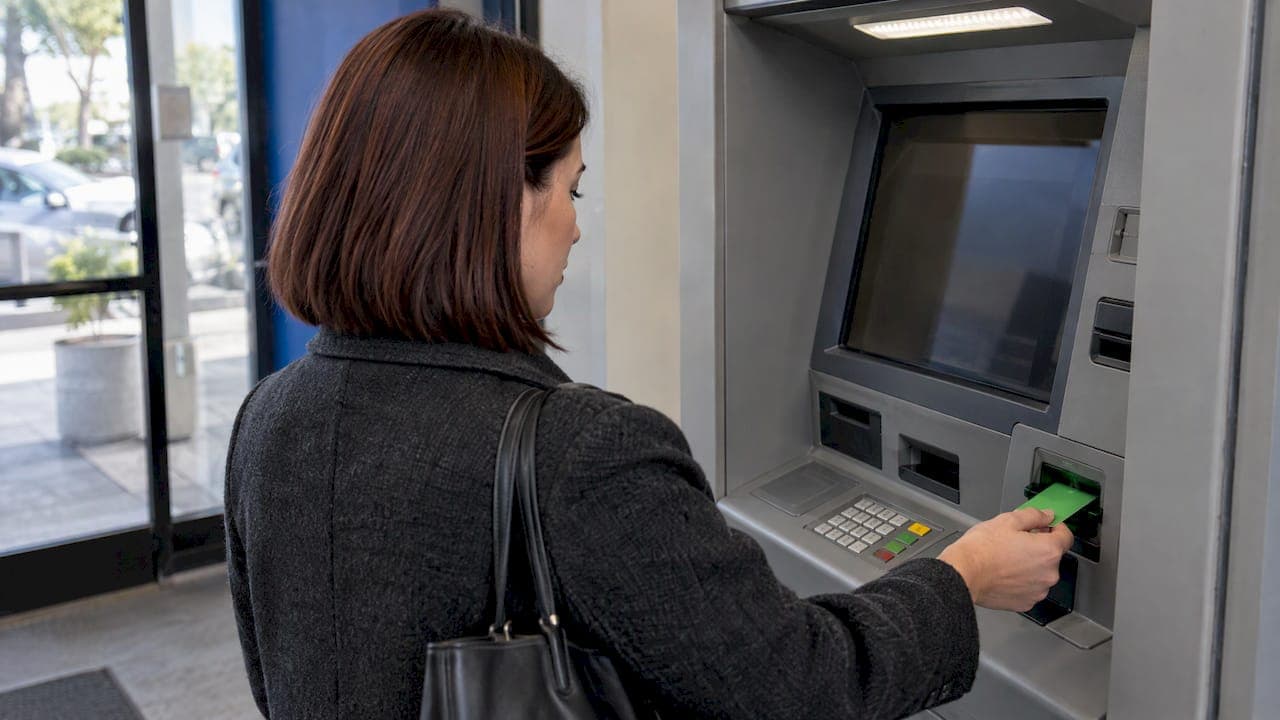
You can pay California employees with a payroll card, but only if the program is voluntary and the card gives workers full, fee-free access to every dollar of their wages. California has no statute written specifically for paycards. Instead, the general wage-payment sections of the Labor Code and the federal Regulation E govern them. This guide explains what those rules mean in practice, what a compliant program looks like, and where employers most often go wrong.
TL;DR
- California statutes do not expressly address wages paid on payroll cards, so the general wage-payment rules in Labor Code sections 212 and 213 are the starting point.
- Federal Regulation E bars employers from requiring that employees be paid only on a payroll card. Offer it as a choice, never as a condition of the job.
- Employees must be able to reach their full wages in cash without being charged to do so. A card that charges to access earned wages creates exposure.
- Get written consent, hand over the full fee schedule before the employee decides, and keep direct deposit and paper checks available.
- Final pay deadlines in California do not change because the employee was paid by card.
Table of Contents
- What California law actually says about paycards
- The 2011 bill: a useful benchmark, not a checklist you can rely on as law
- Federal rules: Regulation E and the no-mandate principle
- Can you require employees to use a paycard?
- Fees: where paycard programs most often fail
- A compliant paycard program, step by step
- Final pay and paycards
- Who is exempt?
- Paycards, direct deposit or paper checks?
- Our perspective
- How Glendale Payroll can help
- Common mistakes to avoid
- FAQ
- Sources
What California law actually says about paycards
California is unusual: it is a state with detailed wage-and-hour law that has no payroll card chapter. A 2005 report from the California Research Bureau found that state law did not expressly allow or restrict pay cards. It pointed instead to Labor Code provisions that prohibit charging employees to access their payroll money or withholding wages.
That gap does not make paycards illegal, and it does not make them a free-for-all. The rules that apply are the ones written for every method of wage payment:
- Labor Code section 212 restricts the instruments an employer may issue in payment of wages. The legislative digest of a later payroll card bill describes existing law as prohibiting cards and similar instruments unless specified requirements are satisfied.
- Labor Code section 213 limits the reach of section 212 and is where voluntary direct deposit is addressed. You can read both in the DLSE's compilation of the laws on time, manner and payment of wages.
- Wage deduction and withholding rules mean the employee must receive the full amount earned, with no charge for turning it into cash.
The practical result, which the top legal and HR guides agree on, is that a paycard is acceptable when the employee agrees to it and can convert all wages into cash without a reduction. Where a card program passes fees to the worker, it is exposed under these existing rules.
The 2011 bill: a useful benchmark, not a checklist you can rely on as law
In 2011 the Legislature considered SB 931, a bill that would have added Labor Code section 213.5 to regulate payroll cards directly. The bill text is still the clearest picture of what California lawmakers considered a fair paycard program. We treat it as a benchmark for good practice, not as enacted law, and you should do the same. A program built to meet its standards is far easier to defend if it is ever questioned.
Its main requirements were:
| Area | What the bill text would have required |
|---|---|
| Payment choices | Before the employee chooses, the employer offers direct deposit to an account of the employee's choosing, a paper check, and a payroll card |
| Consent | Written employee consent, and no making card participation a condition of hire or continued employment |
| Disclosure | A plain-language description of payment options, the cardholder agreement with a complete itemized fee schedule, and a list of services, in the language normally used for employment information |
| Cash access | At least one out-of-network ATM withdrawal per pay period with no issuer fee, at least four in-network withdrawals, and one withdrawal of the full wage balance per pay period |
| Purchases | At least two point-of-sale transactions per pay period with no issuer fee |
| Support | 24/7 automated access to balance information and at least three calls per month to a live representative |
The bill noted that an ATM operator could still charge its own fee. That detail matters, because it is exactly where employees end up paying to reach their own pay.
Federal rules: Regulation E and the no-mandate principle
Whatever California does or does not say, federal law applies in every state. Payroll cards are covered by Regulation E (12 CFR Part 1005), and the Consumer Financial Protection Bureau's 2013 bulletin on payroll card accounts sets out what that means for employers:
- Employers cannot require that employees receive wages exclusively on a payroll card.
- Issuers must provide initial disclosures of fees, plus access to account history and balances.
- Disclosures must be clear and readily understandable, in writing, and in a form the employee can keep.
The CFPB also noted that payroll card holders have limited liability protections for unauthorized use and error resolution rights, provided they report problems within specified timeframes. Employees should be told how to report a lost card or a disputed charge, and that the clock starts when they notice.
The bulletin adds that some employees complained of unexpected fees for ATM use, teller withdrawals and checking their card balance. Those are the three fee categories to examine before you choose any card program.
Can you require employees to use a paycard?
No. Federal guidance prohibits mandatory, exclusive use, and California's wage-payment framework points the same direction. Treat these as firm rules for your program:
- Make it opt-in. Never make a card a condition of hire or continued employment.
- Get consent in writing. Keep a signed record in the personnel file.
- Keep alternatives available. Direct deposit to the employee's own account and a paper check should both remain on the menu.
- Let employees change their mind. A worker who started on a card should be able to move to direct deposit or a check without penalty.
Our separate guide to direct deposit rules for California employers covers the consent and timing requirements for the electronic alternative, with DLSE citations.
Fees: where paycard programs most often fail
The heart of the California issue is cost to the employee. Under the wage-payment framework, employees cannot be charged to receive what they earned. In practice, check each of these before you sign with any card issuer:
- Withdrawing the full balance. Can an employee take out every dollar of a paycheck, at least once per pay period, without any issuer fee?
- ATM access. How many in-network and out-of-network withdrawals are free? Is there an in-network ATM near your worksite, in Glendale, Burbank or Pasadena, not just somewhere in the state?
- Balance checks and statements. Is checking a balance free at an ATM, by phone and online?
- Inactivity, replacement and monthly fees. An employee who is charged a monthly fee has effectively been paid less than the wage earned.
- Cash-out at the end of employment. Can a departing employee move the remaining balance to cash or a bank account without a charge?
If the answer to any of these is "it depends" or "there is a fee," either negotiate it away or choose a different issuer. Writing a fee-free cash option into your own program rules is what turns a risky card program into a defensible one.
A compliant paycard program, step by step
- Choose an issuer on the basis of the employee's total cost, not yours. Ask for the complete itemized fee schedule in writing.
- Prepare a plain-language choice notice. Describe direct deposit, paper check and the card side by side, in the language you normally use for employment information. Provide a Spanish or other translation for employees who work in that language.
- Hand over the cardholder agreement and fee schedule before the employee decides. Not at orientation after the choice has been made.
- Collect written consent. Use a separate form for the card, not a line buried in the offer letter.
- Confirm cash access on day one. Test the card yourself, including a full-balance withdrawal.
- Give a contact path. Employees need a live person for lost cards, disputes and errors.
- Review annually. Issuers change fee schedules. Re-read yours each year and notify employees of any change.
- Keep payroll records tidy. The wage statement still has to show gross wages, deductions and net pay, whichever method delivers the money.
Final pay and paycards
A paycard does not change when final wages are due. Under the DLSE's guidance on paydays, pay periods and final wages, an employee without a written contract for a definite period who gives at least 72 hours' notice and quits on the noticed day must be paid at quitting. One who quits without that notice must be paid within 72 hours.
For a card program, this raises a practical issue. If a former employee is on a card, the final pay must be available in usable form by that deadline. A load that posts days late, or a card that requires a branch visit that employee cannot make, can turn a routine termination into a waiting-time dispute. Many employers pay final wages by paper check delivered on the day, regardless of the method used during employment.

Who is exempt?

California public employers, including state and local governments, do not fall under the provisions that establish the time and form of payment, according to the HRCalifornia wage payment guide. If you are a private small business in Los Angeles County, that exemption almost certainly does not apply to you. Plan on the full set of rules.
Paycards, direct deposit or paper checks?
| Method | Employee consent needed | Typical employee cost | Employer watch-point |
|---|---|---|---|
| Direct deposit to the employee's own account | Yes, voluntary | None from the employer program | Follow the consent and timing rules |
| Paper check | Not applicable | Possible check-cashing costs if the bank is not accessible | Check must be cashable without a fee |
| Payroll card | Yes, in writing, and never a condition of employment | Depends entirely on the issuer's fee schedule | Fee-free cash access and disclosures |
For most small California employers, direct deposit solves the same problem as a paycard, with less risk. Paycards are most useful for employees without a bank account. Even then, they work only if the cash-out terms are clean. If you want to know what else to automate alongside, see our guide to ways to automate payroll processing.
Our perspective
We see paycard questions from small employers who assume that a card from their payroll provider is automatically compliant. It is not. California does not have a paycard statute to lean on, which means the burden falls on you to show that the program is voluntary, that employees can reach all of their wages in cash, and that nobody is paying to get paid.
Our approach is to treat the 2011 bill text and Regulation E as the floor. We start with a written choice notice, a signed consent and the full fee schedule in the employee's hands. Then we confirm that direct deposit and a paper check remain available. A dedicated payroll professional reviews the setup, rather than a call center agent reading from a script.
Because the cost of getting this wrong lands on your business, with back wages, penalties and a wage claim file at the Labor Commissioner's office, we pair every payroll setup with a free payroll audit. It is designed to surface risks like fee exposure, missing consent and late final pay before an employee or an agency does.
Glendale Payroll Staff
How Glendale Payroll can help
If you pay employees in Glendale, Burbank, Pasadena or elsewhere in Greater Los Angeles, we handle payroll processing, direct deposit, federal and California tax filing, W-2 preparation, new hire reporting and EDD account setup, with a dedicated payroll professional assigned to your account.

Our published pricing is $105 per month per company, plus $12 per month per employee, with a one-time $100 setup fee. A team of ten, for example, comes to $225 per month once setup is complete. Every engagement includes a free payroll audit. See the full pricing or browse all payroll services to find what fits.
Common mistakes to avoid
- Making the card the default. Pre-loading new hires onto a card with an opt-out is not the same as a voluntary choice.
- Handing over the fee schedule after the fact. Disclosure has to come before consent.
- Ignoring the ATM network. A card with generous free withdrawals is useless if the nearest in-network ATM is 20 miles from your jobsite.
- Treating the issuer as responsible. The employer pays the wages. If the card fails the employee, the claim comes to you.
- Forgetting penalty exposure on deposits. Payroll tax deposit mistakes carry their own steep penalties. See how to avoid 15% payroll penalties.
- Skipping a process review. A payroll process review is the quickest way to find out whether your payment method, records and filings line up.
FAQ
Are payroll cards legal in California?
Yes, in practice, but they are not governed by a dedicated California statute. The state's wage-payment sections still apply, so the program should be voluntary and employees should be able to turn all of their wages into cash without fees. Federal Regulation E applies on top.
Can I make employees take a paycard?
No. The CFPB's guidance says employers cannot require that wages be received exclusively on a payroll card. Offer it as one choice alongside direct deposit and a paper check, and never tie it to hiring or continued employment.
Do employees have to pay any fees to use a paycard?
They should not pay to reach the wages they earned. The California wage-payment framework prohibits charges to access payroll money. Review every line of the issuer's fee schedule, including ATM, teller, balance inquiry and inactivity fees, before you offer the card.
What about the final paycheck for an employee on a paycard?
The deadlines are the same. An employee who quits with 72 hours' notice is paid on the last day, and one who quits without notice is paid within 72 hours. Make sure the money is accessible in cash by then; many employers issue a paper check for final wages.
Does the free payroll audit review paycard programs?
Our free audit is designed to identify payroll compliance risks and streamline your process. If you use or plan to use a card, we will look at how consent, disclosures and pay timing fit into your overall payroll setup.
Sources
- California Research Bureau: Pay Cards, the Alternative Option (2005)
- SB 931 bill text and digest, California Legislature
- SB 931 as amended, California Legislature
- DLSE: The Laws Relating to the Time, Manner and Payment of Wages
- CFPB Bulletin: Payroll Card Accounts (Regulation E)
- CFPB: Bulletin warns employers against exclusive use of payroll cards
- DLSE: Paydays, pay periods, and final wages
- HRCalifornia: Form of Wage Payment